For some reason, this question reminded me of the ripple of events in A Raisin in the Sun that result in catastrophe by the end of Act II. Presumably, the parts about "social order" and "thirsty aspiration" are most easily identified, as the play circulates around its characters' passionate dreams and the post World War II racial tensions embedded into the Youngers' lives. The family is trapped in a restricted situation with no hope of relief. Then, they recieve a chance of rescue. Mama (Lena Younger) obtains a check of ten thousand dollars and is now desperate to both fufill her family's dreams and relocate to a better community. So she buys a house in a white neighborhood. This single act disrupts the "delicate balance" and drops family morale from high to low. Similarly, when Walter entrusts all his money to his friend, the money disappears and Walter loses what little power he had. These instances from Lorraine Hansberry's play correlate to Mr. Wright's unfathomable question by demanding us to think over our actions carefully, so as to avoid detrimental consequences. After all, the smallest mistake could result in well-structured beliefs, motivation, and spirits toppling down, into oblivion.
Friday, December 14, 2012
Toppling
Richard Wright, an American novelist of the realist school, asks a famous question in his novel Native Son. " "Who knows when some slight shock, " he inquires, "disturbing the delicate balance between social order and thirsty aspiration, shall send the skyscrapers in our cities toppling?"

For some reason, this question reminded me of the ripple of events in A Raisin in the Sun that result in catastrophe by the end of Act II. Presumably, the parts about "social order" and "thirsty aspiration" are most easily identified, as the play circulates around its characters' passionate dreams and the post World War II racial tensions embedded into the Youngers' lives. The family is trapped in a restricted situation with no hope of relief. Then, they recieve a chance of rescue. Mama (Lena Younger) obtains a check of ten thousand dollars and is now desperate to both fufill her family's dreams and relocate to a better community. So she buys a house in a white neighborhood. This single act disrupts the "delicate balance" and drops family morale from high to low. Similarly, when Walter entrusts all his money to his friend, the money disappears and Walter loses what little power he had. These instances from Lorraine Hansberry's play correlate to Mr. Wright's unfathomable question by demanding us to think over our actions carefully, so as to avoid detrimental consequences. After all, the smallest mistake could result in well-structured beliefs, motivation, and spirits toppling down, into oblivion.
For some reason, this question reminded me of the ripple of events in A Raisin in the Sun that result in catastrophe by the end of Act II. Presumably, the parts about "social order" and "thirsty aspiration" are most easily identified, as the play circulates around its characters' passionate dreams and the post World War II racial tensions embedded into the Youngers' lives. The family is trapped in a restricted situation with no hope of relief. Then, they recieve a chance of rescue. Mama (Lena Younger) obtains a check of ten thousand dollars and is now desperate to both fufill her family's dreams and relocate to a better community. So she buys a house in a white neighborhood. This single act disrupts the "delicate balance" and drops family morale from high to low. Similarly, when Walter entrusts all his money to his friend, the money disappears and Walter loses what little power he had. These instances from Lorraine Hansberry's play correlate to Mr. Wright's unfathomable question by demanding us to think over our actions carefully, so as to avoid detrimental consequences. After all, the smallest mistake could result in well-structured beliefs, motivation, and spirits toppling down, into oblivion.

Friday, December 7, 2012
Take a Stand!
Most people, if asked, will advocate for supporting justice and taking a stand. Here's the thing--they don't really mean it. We all think standing up for what's right is hypothetically wonderful, yet when we see it in normal life situations, we dismiss it as awkward and unnecessary. People don't want others to do what's right; they just want them to cause the least amount of trouble as possible. The Langston Hughes poem emphasizes the amount of courage needed to break this obstacle and how people should support others without judgement. That's why America is so celebrated or "sung": it strives for pushing conventional boundaries and revering diversity.
Friday, November 30, 2012
The "Great" Gatsby's Acts
F.Scott Fitzgerald's The Great Gatsby establishes several layers of meaning regarding Gatsby. Jay Gatsby is the mastermind magician of the story, who both tricks and pleases people whenever he wants.
 For example, he is seen as deceptive and influential. It is discovered that he decieves multiple people in the pursuit of fortune due to his illegal business endeavors. He also makes Nick believe that they share a special connection by inviting him to parties and divulging into his fictitious past. Thanks to Gatsby's cunning maneuvers, Nick is stripped of his likeable personality. He goes from being an "unbiased" and honest narrator to a weak, servile, and-gay?-individual who gets entwined in the drama of others. Instead of being a symbol of decency in his corrupted society, Nick's character is reduced to that of a confused young man who is just as immoral as the rest of his deranged neighbors. This is shown when Nick goes along with Gatsby's plans when he knows they are not right. Gatsby even manipulates Daisy, the woman of his dreams. His idealized version of her far exceeds her actual persona, so she is forced to become the unattainable "perfect woman" or "golden girl" Gatsby has made her out to be. This shows that Gatsby's manipulation could be what results in his downfall.
On the other hand, Gatsby is also seen as a charming gentleman who spends much of his own luxury for the sake of others. Later, we realize the parties and kind attitude towards Nick were staged, but the fact remains that he is still one of the few characters free of carelessness and bigotry. Therefore, the reason he is "great" is because of his determination and faith that he can change his identity. The illusion of "Gatsby" created by Jimmy Gatz is what makes him truly great and awe-inspiring.
 For example, he is seen as deceptive and influential. It is discovered that he decieves multiple people in the pursuit of fortune due to his illegal business endeavors. He also makes Nick believe that they share a special connection by inviting him to parties and divulging into his fictitious past. Thanks to Gatsby's cunning maneuvers, Nick is stripped of his likeable personality. He goes from being an "unbiased" and honest narrator to a weak, servile, and-gay?-individual who gets entwined in the drama of others. Instead of being a symbol of decency in his corrupted society, Nick's character is reduced to that of a confused young man who is just as immoral as the rest of his deranged neighbors. This is shown when Nick goes along with Gatsby's plans when he knows they are not right. Gatsby even manipulates Daisy, the woman of his dreams. His idealized version of her far exceeds her actual persona, so she is forced to become the unattainable "perfect woman" or "golden girl" Gatsby has made her out to be. This shows that Gatsby's manipulation could be what results in his downfall.
On the other hand, Gatsby is also seen as a charming gentleman who spends much of his own luxury for the sake of others. Later, we realize the parties and kind attitude towards Nick were staged, but the fact remains that he is still one of the few characters free of carelessness and bigotry. Therefore, the reason he is "great" is because of his determination and faith that he can change his identity. The illusion of "Gatsby" created by Jimmy Gatz is what makes him truly great and awe-inspiring.
Wednesday, November 21, 2012
Violence in Humans
In "The History Teacher", Billy Collins allows us to perceive the teacher as harmless and eccentric. The educator is immune to tragedy and is a comical character for the students as he can see only the benefits of protecting their innocence. This leads to the serious message of the piece which conveys that he fails to see the potential evil in his students. The cruel children of the playground are preparing themselves for the future in which they too can perpetuate crimes against humanity. Perhaps if the children had been taught properly about the past and the consequences of violence, they would not have been so eager to behave so harshly towards others portrayed as inferior to them.

Nevertheless, this is only speculation. We don't know for sure that exposing the unfortunate truth of the past will instantly cure kids of their desire to attack others. In fact, might it not produce an opposite effect? Here in America, nothing is shielded from children. We grow up with a sense of entitlement; the feel that we have a right to know whatever we want, regardless of boundaries. It is an accepted component of American society, along with the tendency to constantly compete with others. Therefore, "The History Teacher" stanza on bullying children can impart the idea that violence is a vital part of history that will remain for evermore.
Nevertheless, this is only speculation. We don't know for sure that exposing the unfortunate truth of the past will instantly cure kids of their desire to attack others. In fact, might it not produce an opposite effect? Here in America, nothing is shielded from children. We grow up with a sense of entitlement; the feel that we have a right to know whatever we want, regardless of boundaries. It is an accepted component of American society, along with the tendency to constantly compete with others. Therefore, "The History Teacher" stanza on bullying children can impart the idea that violence is a vital part of history that will remain for evermore.
Friday, November 16, 2012
Defending Survivors: Why are they special?
The piece Sanctuary: For Harry Potter the Movie displays the significance of survivors and how they are protected. In this "poem", Nikki Giovanni draws a connection between the famous scar-marked teenager and a baby elephant in Africa. They are both survivors; both a symbol for a wronged individual saved by his mother.
 Yet, why did Harry survive in the first book? Because his mother sacrificed herself for him? So out of all of Voldemort's other victims, not one of them had a family member or friend who loved them at least as much as Harry's mother loved him? Moreover, if it was a simple as that, why didn't Dumbledore or somebody say "Hey, everybody! All you have to do is love someone and be willing to die in his place, and the Dark Lord is powerless!" These views only emphasize the fact that Harry is not all that special; his predicament could be the same of any other Wizarding child loved by his parents.
Going back to the baby elephant component of the metaphor, Giovanni claims "The alpha female takes up the charge while the other females surround the baby" (line 16-17). While the mother takes on the attacker, the rest of the herd seem to take it upon itself to protect the child. The other elephants isolate him and make him a survivor by their beliefs in the necessity of the young creature living to remember his past.
Therefore, the only reason the elephant lives is because his companions want him to exist as an idol of their struggle. Likewise, Harry is rescued because he is a reminder of love: the only force potent enough to defeat Voldemort. This is why it can be seen that society chooses who to defend and let survive because it wants to preserve hope for itself no matter the costs.
Going back to the baby elephant component of the metaphor, Giovanni claims "The alpha female takes up the charge while the other females surround the baby" (line 16-17). While the mother takes on the attacker, the rest of the herd seem to take it upon itself to protect the child. The other elephants isolate him and make him a survivor by their beliefs in the necessity of the young creature living to remember his past.
Therefore, the only reason the elephant lives is because his companions want him to exist as an idol of their struggle. Likewise, Harry is rescued because he is a reminder of love: the only force potent enough to defeat Voldemort. This is why it can be seen that society chooses who to defend and let survive because it wants to preserve hope for itself no matter the costs.
Friday, November 9, 2012
A Complete Review of The Scarlet Letter
I am now ready to share my thoughts on the whole book. Maybe I was too quick to judge it last week, because my view has drastically changed. Needless to say, I actually enjoyed it very much. The imagery is mind-blowing in the second half. Before, the words accented the attributes of the character's problems, whereas now they paint visions of the open, verdant forest enveloping a crystalline brook and rosy-bright wildlife. This can relate to how in the first twelve chapters everything seems utterly irrevocable, and how hope blooms--admittedly, not for long--for Hester and Dimmesdale's situation.
 Another positive aspect shown is Hester's transformation from a shamed woman to a determined and capable individual. After harboring two mens' secrets for so long, she finally does something about it by confronting them and speaking her mind. This really endeared her to me because I was finally getting the action and twists of a good mystery story, not to mention the joy of seeing a broken person repair herself and go after what she wants after years of hardship.
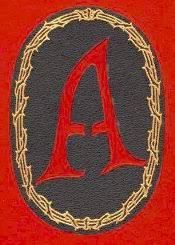
The scarlet letter also takes on a whole new meaning by the end of the text. It ingrains itself into Hester's identity, and eventually, becomes insignificant by perspective which depicts the pointlessness of society's judgement and punishment. By the end, the 'A' stands for 'angel' which is what Hester is perceived to be by the townspeople. The book's last line pronounces "On A field, Sable, the letter A, Gules" (Hawthorne 259). The dictionary meaning of sable and gules is black and red, which can show that the scarlet emblem brands her even in death's dark hold. The death of Hester and her shame ends the story, and with it, my thoughts on this book.
Another positive aspect shown is Hester's transformation from a shamed woman to a determined and capable individual. After harboring two mens' secrets for so long, she finally does something about it by confronting them and speaking her mind. This really endeared her to me because I was finally getting the action and twists of a good mystery story, not to mention the joy of seeing a broken person repair herself and go after what she wants after years of hardship.The scarlet letter also takes on a whole new meaning by the end of the text. It ingrains itself into Hester's identity, and eventually, becomes insignificant by perspective which depicts the pointlessness of society's judgement and punishment. By the end, the 'A' stands for 'angel' which is what Hester is perceived to be by the townspeople. The book's last line pronounces "On A field, Sable, the letter A, Gules" (Hawthorne 259). The dictionary meaning of sable and gules is black and red, which can show that the scarlet emblem brands her even in death's dark hold. The death of Hester and her shame ends the story, and with it, my thoughts on this book.
Friday, November 2, 2012
A Review of the First 12 Chapters on The Scarlet Letter
This week was devoted to studying The Scarlet Letter by Nathaniel Hawthorne. While I realize it is a key component of any American Literature class, I also discovered that I am not that big a fan of this book. First of all, there is the Custom House chapter. My first reaction to this section was When is this going to end? because it seemed like blocks of pure description for over forty pages.
 Re-reading it, I discovered that Hawthorne uses satire to mock his situation and that it is actually pretty funny. The sad part is not that the narrator loses his job, but that this is probably the best part of the whole book. It has a light-hearted tone that of which is not seen anywhere else in the novel. The next twelve chapters have a gloomy and serious feel, which relates to the events portrayed, but also really depressed me. Not only does the mood dampen the lives of Hester and Dimmesdale, it makes me less enthusiastic to read this book.
Moreover, the characters are too unrealistic for me. I understand the novel is supposed to be dramatic, but I feel Hester is a little too ready to dedicate her life to proving a point; Dimmesdale gets too obsessed with his sense of guilt (which remains dormant for three years and then flares up like crazy); and Chillingworth is too maniacal about his bizarre 'revenge'.
The pacing of this book is extremely slow. This has to do with Hawthorne's tendency to tell us about his characters rather than let us infer meaning from their dialogue and actions. Therefore, because so little actually 'happens', this supposed mystery story doesn't have all that much suspense or excitement.
Also, Hawthorne uses the phrase "the scarlet letter at her breast" at least fifty times. And after the first few repetitions, it isn't even interesting anymore. Rather than emphasize her distinctiveness and ignominy, it only seems to trivialize the symbol by making it appear frequent, commonplace, and hopelessly stuck to Hester's character.
Hopefully the story will pick up a bit in the next half, but I have to say, with exception to the first few chapters, The Scarlet Letter is too dark and sluggish for my liking.
Moreover, the characters are too unrealistic for me. I understand the novel is supposed to be dramatic, but I feel Hester is a little too ready to dedicate her life to proving a point; Dimmesdale gets too obsessed with his sense of guilt (which remains dormant for three years and then flares up like crazy); and Chillingworth is too maniacal about his bizarre 'revenge'.
The pacing of this book is extremely slow. This has to do with Hawthorne's tendency to tell us about his characters rather than let us infer meaning from their dialogue and actions. Therefore, because so little actually 'happens', this supposed mystery story doesn't have all that much suspense or excitement.
Also, Hawthorne uses the phrase "the scarlet letter at her breast" at least fifty times. And after the first few repetitions, it isn't even interesting anymore. Rather than emphasize her distinctiveness and ignominy, it only seems to trivialize the symbol by making it appear frequent, commonplace, and hopelessly stuck to Hester's character.
Hopefully the story will pick up a bit in the next half, but I have to say, with exception to the first few chapters, The Scarlet Letter is too dark and sluggish for my liking.
Friday, October 26, 2012
What Water Is
David Foster Wallace kicked off his commencement speech "This is Water" by saying
"There are these two young fish swimming along, and they happen to meet with an older fish swimming the other way, who nods at them and says 'Morning, boys, how's the water?' And the two young fish swim on for a bit, and then one of them looks over at the other and goes 'What the hell is water?'"
 Wallace goes on to assure his listeners that the purpose of his speech is not for him to assume the role of an old fish that explains water's meaning to nearby youngsters. In fact, he makes this assertion at least three times to make sure he is not misunderstood. That's why it proves ironic that Wallace is indeed devoting his oration to defining 'water' that is the life we humans struggle though every day.
Water in this piece represents the flagrant but unnoticed aspects of life that we never see. The speaker reminds his audience that people generally choose to ignore anything that doesn't directly concern them, and that this is the "default-setting" for an average individual. Those who 'adjust' this setting are more aware and self-centered, and have the ability to embrace any aspect of life they encounter.
Going back to the fish metaphor, it seems that the older fish is one of those rare, self-centered creatures that is at peace with the world around him. So...is the message of this story that only people old in age and experience are able to aquire this adjusting skill? Perhaps, but it is my opinion that children are more reflective of their surroundings, whereas adults typically come off as self-absorbed and distant. Therefore, it is possible we are all born with the talent to appreciate our surroundings, but we lose it as we age.
"There are these two young fish swimming along, and they happen to meet with an older fish swimming the other way, who nods at them and says 'Morning, boys, how's the water?' And the two young fish swim on for a bit, and then one of them looks over at the other and goes 'What the hell is water?'"
Water in this piece represents the flagrant but unnoticed aspects of life that we never see. The speaker reminds his audience that people generally choose to ignore anything that doesn't directly concern them, and that this is the "default-setting" for an average individual. Those who 'adjust' this setting are more aware and self-centered, and have the ability to embrace any aspect of life they encounter.
Going back to the fish metaphor, it seems that the older fish is one of those rare, self-centered creatures that is at peace with the world around him. So...is the message of this story that only people old in age and experience are able to aquire this adjusting skill? Perhaps, but it is my opinion that children are more reflective of their surroundings, whereas adults typically come off as self-absorbed and distant. Therefore, it is possible we are all born with the talent to appreciate our surroundings, but we lose it as we age.
Friday, October 19, 2012
Paine's View on Pain
This week we read several literature pieces of early American history. One of them is titled The Crisis by Thomas Paine. Paine was an outspoken colonist that wrote papers calling for an America free of British rule. He wrote The Crisis to urge fighting colonists to not lose faith. Paine makes the essay inspirational and dramatic by writing statements such as "I love the man that can smile in trouble, that can gather strength from distress, and grow brave by reflection."

Certainly, this quote evokes a sense of awe in people because, ultimately, we wish we will be able to make the best of difficult times. Apparently, Paine 'loves' those who are able to do so. Yet, is it wise to be so optimistic? Let's not forget that in those days, America was under Britain's thumb, the whole country was desperate, and people were losing family, friends, and faith to the war. Only a fool would disregard all of this and smile. But, according to Paine, that would be the respectable thing to do.
This principle of life can be reflected in today's society as well. Whenever something dreadful happens to us, we feel compelled to put on a bright face and try to forget the pain. But I think we have to accept the pain and mourn the incident because it is an essential part of our life. People have the right to despair and their grief should not be hidden for the sake of false bravado. Earlier today, someone told me her dog had died recently. Then she gave a little laugh. I, on the other hand, don't find this particularily funny--it's horrible and should be treated as such.
That's why, I choose to interpret the Thomas Paine quote a slightly different way: Be free to feel loss, but don't give up hope because eventually the situation will improve and you will walk away a more enlightened person.
Certainly, this quote evokes a sense of awe in people because, ultimately, we wish we will be able to make the best of difficult times. Apparently, Paine 'loves' those who are able to do so. Yet, is it wise to be so optimistic? Let's not forget that in those days, America was under Britain's thumb, the whole country was desperate, and people were losing family, friends, and faith to the war. Only a fool would disregard all of this and smile. But, according to Paine, that would be the respectable thing to do.
This principle of life can be reflected in today's society as well. Whenever something dreadful happens to us, we feel compelled to put on a bright face and try to forget the pain. But I think we have to accept the pain and mourn the incident because it is an essential part of our life. People have the right to despair and their grief should not be hidden for the sake of false bravado. Earlier today, someone told me her dog had died recently. Then she gave a little laugh. I, on the other hand, don't find this particularily funny--it's horrible and should be treated as such.
That's why, I choose to interpret the Thomas Paine quote a slightly different way: Be free to feel loss, but don't give up hope because eventually the situation will improve and you will walk away a more enlightened person.
Friday, October 12, 2012
John Proctor's Problems
When I first read about the end of John Proctor's life, I felt somewhat vindicated. Even though he's the main tragic hero of the play, he initiated the whole sequence of miserable events by cheating on his wife. This made Abigail falsely interpret love for her and eventually, pull a prank which would result in others getting blamed for witchcraft. At that point, the situation spirals out of control with mob mentality dictating official court decisions and innocent people being killed for 'consorting with the Devil'.
If I had somehow landed in his position, I would confess to being a witch. It might not be the moral solution to the problem, but at least I would emerge alive and be able to take care of my family. Proctor ignores the fact that his children have been left to some nearby farmers and that he is their only chance of living with a parent again. He just obsesses with self pity about his reputation, and deludes himself into thinking he's doing everyone some great favor by willingly heading off to the gallows. In reality, even if he becomes a saint in his last few hours of life, the village's structure has already collapsed and only a few people will remember him as a good, reputable citizen.
This also ties into how an individual's identity is his most important possession. One of my favorite teachers claimed earlier today that society affects external actions, while his inner feelings are comprised mainly of guilt and shame for being so easily swayed. Apparently, this doesn't apply to John Proctor, because although he debunks his concealed sins, society's hysteria never seems to touch him. He sees things for what they are very clearly from Act I to his untimely death, yet it takes him much too long to realize the errors of his ways and attempt to diffuse the situation. As people are being sentenced death left and right during this time, he can be perceived as the careless villian of this early American piece.
Friday, October 5, 2012
Hated Characters: Connections from The Crucible and Harry Potter
This week in class we began Arthur Miller's The Crucible, which concerns the witch trials of Salem and the people involved. It becomes clear, throughout the first few acts, that Abigail Williams is responsible for the arrests of over thirty women in her village. She sets up Elizabeth, John Proctor's wife, to make it look as though the goodwife has evil powers so she can continue her affair with John once his wife is dead.
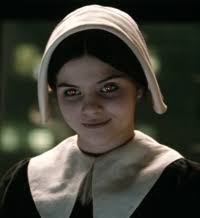 Due to her actions, Abigail is an insufferable character that can quickly be hated by audiences. Conversely, because it is fun to hate and criticize her, she can be interpreted as one of the best characters in the play. I think Abigail, my favorite character in The Crucible, can be linked to my least favorite character in the Harry Potter series: Ron Weasley.

Their most obvious similarity, perhaps, is their remarkable skill of
ruining the relationships, and ultimately, lives, of the people nearest to them. This can be shown in their skewed sense of logic. Abigail assumes John Proctor will happily love and marry her if she kills his wife, while Ron is under the impression Hermione will continue to support him while he ridicules her and goes out with other girls.
Also, when Mary Warren and Betty Parris rely on Abigail to protect them, she threatens and scares them right when they need her most. This causes Mary Warren to suffer some sort of breakdown later. It relates to when Ron abandons his friends during their camping trip. While I enjoyed his absence, he does finally return, simply by showing up and being forgiven instantaneously. Harry tells him not to worry about it, and that "it's okay." It's okay?! This is not the first time Ron has done something like this; at least once in every book he turns his back on Harry or Hermione.
Possibly Abigail's biggest accomplishment is her rapid rise to power. For the first eighteen years of her life, she is just a scheming servent; a preacher's irritating niece. Now, she is a manipulative young woman; ultimately the sole judge of which innocent women will be brought to court and probably hanged because her love obsessions. Likewise, Ron gains some power in the final book of the series. He becomes marginally more thoughtful, and smarter in the decisions he makes for the trio. In the first six books, he's just this idiot that tries to be funny, whereas now it appears he actually has significant contributions to share with the group. These similarities show how detested characters can become more interesting when fans indignantly point out their flaws and find entertainment in their personalities.
Their most obvious similarity, perhaps, is their remarkable skill of
ruining the relationships, and ultimately, lives, of the people nearest to them. This can be shown in their skewed sense of logic. Abigail assumes John Proctor will happily love and marry her if she kills his wife, while Ron is under the impression Hermione will continue to support him while he ridicules her and goes out with other girls.
Also, when Mary Warren and Betty Parris rely on Abigail to protect them, she threatens and scares them right when they need her most. This causes Mary Warren to suffer some sort of breakdown later. It relates to when Ron abandons his friends during their camping trip. While I enjoyed his absence, he does finally return, simply by showing up and being forgiven instantaneously. Harry tells him not to worry about it, and that "it's okay." It's okay?! This is not the first time Ron has done something like this; at least once in every book he turns his back on Harry or Hermione.
Possibly Abigail's biggest accomplishment is her rapid rise to power. For the first eighteen years of her life, she is just a scheming servent; a preacher's irritating niece. Now, she is a manipulative young woman; ultimately the sole judge of which innocent women will be brought to court and probably hanged because her love obsessions. Likewise, Ron gains some power in the final book of the series. He becomes marginally more thoughtful, and smarter in the decisions he makes for the trio. In the first six books, he's just this idiot that tries to be funny, whereas now it appears he actually has significant contributions to share with the group. These similarities show how detested characters can become more interesting when fans indignantly point out their flaws and find entertainment in their personalities.
Friday, September 28, 2012
The Effect of Stereotypes: Inside and Out
The Effect of Stereotypes: Inside and Out
At the beginning of this week, we focused on Native American stereotyping in films like 'Stagecoach' and 'The Lone Ranger'. In these two examples, the devaluation of Native Americans seems obvious and cruel. Yet, in 'Smoke Signals', the first film made with input from a Native American, the characters seem to be over-exaggerating the cultural stereotypes imposed on them to show their knowlege of the humor their antics provide.
When Thomas jokes around with Victor on a bus scene, Victor instantly castigates him for "looking too happy". This plays on the well-known misconception of Native Americans being a stoic and callous ethnic group. Moreover, Thomas is perceived as naive and inexperienced in the ways of the world, which is how early Americans viewed the Native Americans.
This reminded me of the guest speaker's presentation in school this week. Michael Fowlin is a excellent orator who specializes in the human nature to evaluate and categorize people. He reminisced about how "I had to learn all the black jokes and tell them, so people wouldn't ridicule me for the color of my skin."
These sources indicate that people who are labelled a certain way grow to think of themselves differently, and link cultural stereotypes to their individual identities. Not only does this lower one's self esteem, it reduces any sense of pride and power from his heritage.
Friday, September 21, 2012
Thoughts on Native American Reservation Life
9/21/2012
Thoughts on Native American Reservation Life
This week's reading selections forced me to consider the plight of Native Americans that grow up in harsh surroundings full of poverty and despair. In the short stories by Sherman Alexie, Native Americans are portrayed as people with traumatic personal experiences and emotions due to their upbringing. In the 'Tenth Grade' portion of "Indian Education", the narrator describes the suicide of a fellow Native American who crashed his car into a tree. Upon learning of the man's bizarre actions, the police demand to know his reasoning.
" 'Don't know,' we all said, but when we look in the mirror, see the history of our tribe in our eyes, taste failure in the tap water, and shake with old tears, we understand completely."
This captivating segment conveys a heavy burden that is placed on the shoulders of every Native American that learns of his heart-breaking history and the crushing stereotypes that others have imposed on his culture.
Most people can dismiss this behavior as completely irrational because, don't the Native Americans know? This is America, land of freedom, where change and rights will come to those who wait for them. Yet, even today, there are still Indian reservations established all over the country. To desperate Native Americans, like the one depicted in "Indian Education", their situation hasn't changed and never will.
Thursday, September 6, 2012
Subscribe to:
Comments (Atom)