Friday, March 22, 2013
Flamingo Fad
Ever notice how nothing ever stays the same? Change is inevitable and it constantly alters normal practicalities. This tenet of life is heavily bolstered by Jennifer Price's essay "The Plastic Pink Flamingo: A Natural History". In the piece, the writer sculpts a position on society's transient view of a certain concept or symbol. She claims "in South Beach, especially, architects employed...bright pinks and flaming motifs" and that this is ironic because "Americans had hunted flamingos to extinction in Florida in the late 1800's for plumes and meat" (10-15). This information proves significant as it demonstrates how peoples' attitudes toward something can radically flip as time passes.
 Apparently, Americans used to regard flamingos purely as a resource in the 1800's. They would kill the birds for the meat and feathers, and practically destroy any trace of existing flamingos. Eventually, as flamingos spiraled upward to the height of glamour, they became the epitome of sophistication and extravagance. At this point, flamingos could be seen everywhere in Florida; their presence infused vibrant life into the community. Phenomena like this verify peoples' ability to adapt circumstances to their benefit, even if it differs from prior practices. Humans are fickle creatures; they are willing to change their entire view of something just to keep up with their trend-conscious society.

Saturday, March 16, 2013
Knowing When To Let Go
The theme of this week's reading revolves around rejecting common practices and ideas. Writers like Kincaid, Raymo, and Wilson use their literary skills to escape from conventional thinking in today's society.
 In "On Seeing England for the First Time", Jamaica Kincaid contemplates her childhood home and its constant infatuation with English tradition. She admits to being initially awestruck with the sophisticated, exotic country when she claims "We understood then...that England was meant to be our source of myth, and the source from which we got our sense of reality" (Paragraph 1, 23-26). Kincaid was hypnotized by the power and wonder England exuded because English culture was infused entirely into her up-bringing. Later, she acknowledges harboring resentment toward England as its impositions overwhelmed Antigua's culture. This piece emphasizes Kincaid's ability to realize the detrimental effect of English legacy and to disassociate herself from its captivating imperiousness.
 Likewise, in Raymo's "Measure of Restraint", the author conveys his vehement disgust of genetic manipulation, a monumental breakthrough in science that many approve of. While Raymo concedes that gene engineering has the potential to save several people, he insists the overall effect will cause more harm than help. Instead of appreciating the quick benefits of the process, Raymo agitates over the long-lasting effect of how "a gene is potentially immortal" (Paragraph 10, 20). His conviction that humans must stop meddling with nature links to his belief that they should relinquish scientific control and understand their limitations.
 E.O. Wilson is yet another writer who advocates sacrificing tradition. He penned two journal entries that capture the stereotypical cognition processes of environmentalists and those who oppose them. The satire-laden first piece suggests leaving endagered land to its rightful owner, therefore hinting to environmentalists to refrain from typical conservation. By doing this, Wilson is able to mockingly resist normal ways to deal with environmental issues, and provide a different option that could still potentially be useful. He attempts to dissuade the tendency to clutch at power obsessively, so he can express to environmentalists that backing down can lead to good.
In this way, these authors stress the importance of letting go of well-defined notions and creating fresh opinions that enhance independent thinking, untouched by familiar establishments.
In this way, these authors stress the importance of letting go of well-defined notions and creating fresh opinions that enhance independent thinking, untouched by familiar establishments.
Friday, March 8, 2013
Everything's A Lie
This week our class began examining persuasion methods. We reviewed ethos (credibility), pathos (emotion) and logos (hard fact). Probably the most interesting thing I gleaned from the note-taking is that none of these factors necessarily have to be true in order to formulate an effective argument. It is ironic that the fundamental principles that create the basis for a solid argument can be completely faked or misconstrued.
 For example, pathos can be over-manipulative. How many times have we heard people on television implore "Donate money to _____________ organization; all funds go to helpless children in Africa. With the money that you don't need, we can provide education, stability, and life to struggling African people."? This altruistic sentiment instantly forces people to endure guilt for enjoying their luxuries while their fellow humans suffer a devastating, endless existence. The problem resides in the fact that many of the celebrities reciting this campaign don't realize that some Americans don't have the money to relinquish for others' salvation. Also, why does "children in Africa" evoke such sympathy in people? While I ache for any agonized child, I am also pretty sure that not every single child in Africa is afflicted with miserable circumstances. The ridiculous use of generalization--almost racism--creates false images for the public to bear when appealed to for it compassion.
 Logos establishes solid evidence that bolsters the claim. Why, then, can supposedly irrefutable truth be twisted in several directions? This can be seen in an experiment regarding the jumping abilities of grasshoppers. Someone would clap, and the grasshopper would jump in response to the stimulus. Each time it jumped, it would lose a leg, and the distance covered would be less than the distance previously covered with one more leg. Eventually, the insect would not be able to jump, regardless of the clap. The scientific conclusion to these trials determined that the number of legs was directly proportional to the distance jumped, and that each leg functions specifically for the act of jumping. However, a little boy witnessing the event perceived that the less legs a grasshopper has, the more deaf it becomes to external sound. Shockingly, this also falls in agreement with the data recorded and could be hypothetically accurate. In this way, evidence is not so objective; it is still open to interpretation and the separate parties' purposes.
 Ethos defines reliability on the part of the writer. This one is the easiest to fake. Several politicians appear reputable, but possess skeletons in the closet that they cannot afford to reveal. Yet, they still succeed at their goal: to sway voters to their side. Clearly, their reputations--whether valid or not--play a big part whenever people decide to trust them. In addition, people want to feel authority from an expert when they read or hear arguments. Nevertheless, anyone can pretend he knows what he is talking about in a written piece. In these days, Internet connections facilitate arguments by offering quick information with almost no work required.
Therefore, persuasive appeals are little more than tricks debaters use to pull proponents to their sides. They can be genuine, but it makes no difference in their overall effect on the public's views.
Therefore, persuasive appeals are little more than tricks debaters use to pull proponents to their sides. They can be genuine, but it makes no difference in their overall effect on the public's views.
Friday, March 1, 2013
A Rare Read
Brent Staples's "Black Men and Public Space" is one of the most unique passages I have read in English class. From Maya Angelou to Judith Ortez Cofer to Sherman Alexie, narratives regarding racial conceptions are typically written to protest prejudice and communicate indignation. This practice is totally justified and necessary in order to discourage this sort of racial judgement, but it is also refreshing to witness a writer who has learned to accept his appearance and its implications on society.
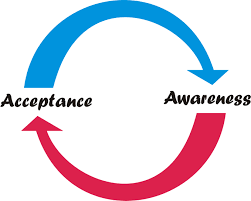 Staples depicts himself as a "black man...a broad six feet two inches with a beard and billowing hair" to allow his readers to evaluate their initial impression of him (Paragraph 1, 6-7). He is aware that these characteristics make others view him with suspicion. When describing the defensive actions women take when they encounter him, he readily agrees that "the danger they perceive is not a hallucination" (Paragraph 5, 4). Staples's forgiving and sympathetic personality radiates throught this line, forging him into a character that is able to live with his unnerving skill of altering public tension.
This example can be juxtaposed with the overall tone of Sherman Alexie's Indian Education. When Alexie reads the newspaper declaring "Indians Lose Again", he snarkily challenges "Go ahead and tell me none of this is supposed to hurt me very much" (Eleventh Grade, 8-9). I don't include this to trivialize Alexie's experiences and suffering, but the attitude it evokes varys widely with that of Staple's. Both pieces portray young men as heavily penalized for their background, and both entwine dark imagery and foreboding diction to convey despair. However, Alexie's passages constantly stimulate pity and self-deprecation, whereas Staples continues to assure his readers of his understanding of human categorization.
It seems to me that Staples is able to distinguish himself by rising above public hate and maintaining a positive demeanor about his situation. When most writers get a chance to share their private experiences with society, they take it as a chance to expel all their memories of injustice to wholeheartedly shame the people who treated them unfairly. Staples manages to refrain from joining this group, and recognizes that his ability to bend public space is only a curse if he makes it so. That's what makes him such a striking individual: he is willing to excuse rudeness as normal behavior and use it to strengthen his identity.
This example can be juxtaposed with the overall tone of Sherman Alexie's Indian Education. When Alexie reads the newspaper declaring "Indians Lose Again", he snarkily challenges "Go ahead and tell me none of this is supposed to hurt me very much" (Eleventh Grade, 8-9). I don't include this to trivialize Alexie's experiences and suffering, but the attitude it evokes varys widely with that of Staple's. Both pieces portray young men as heavily penalized for their background, and both entwine dark imagery and foreboding diction to convey despair. However, Alexie's passages constantly stimulate pity and self-deprecation, whereas Staples continues to assure his readers of his understanding of human categorization.
It seems to me that Staples is able to distinguish himself by rising above public hate and maintaining a positive demeanor about his situation. When most writers get a chance to share their private experiences with society, they take it as a chance to expel all their memories of injustice to wholeheartedly shame the people who treated them unfairly. Staples manages to refrain from joining this group, and recognizes that his ability to bend public space is only a curse if he makes it so. That's what makes him such a striking individual: he is willing to excuse rudeness as normal behavior and use it to strengthen his identity.
Subscribe to:
Comments (Atom)