Therefore, persuasive appeals are little more than tricks debaters use to pull proponents to their sides. They can be genuine, but it makes no difference in their overall effect on the public's views.
Friday, March 8, 2013
Everything's A Lie
This week our class began examining persuasion methods. We reviewed ethos (credibility), pathos (emotion) and logos (hard fact). Probably the most interesting thing I gleaned from the note-taking is that none of these factors necessarily have to be true in order to formulate an effective argument. It is ironic that the fundamental principles that create the basis for a solid argument can be completely faked or misconstrued.
 For example, pathos can be over-manipulative. How many times have we heard people on television implore "Donate money to _____________ organization; all funds go to helpless children in Africa. With the money that you don't need, we can provide education, stability, and life to struggling African people."? This altruistic sentiment instantly forces people to endure guilt for enjoying their luxuries while their fellow humans suffer a devastating, endless existence. The problem resides in the fact that many of the celebrities reciting this campaign don't realize that some Americans don't have the money to relinquish for others' salvation. Also, why does "children in Africa" evoke such sympathy in people? While I ache for any agonized child, I am also pretty sure that not every single child in Africa is afflicted with miserable circumstances. The ridiculous use of generalization--almost racism--creates false images for the public to bear when appealed to for it compassion.
 Logos establishes solid evidence that bolsters the claim. Why, then, can supposedly irrefutable truth be twisted in several directions? This can be seen in an experiment regarding the jumping abilities of grasshoppers. Someone would clap, and the grasshopper would jump in response to the stimulus. Each time it jumped, it would lose a leg, and the distance covered would be less than the distance previously covered with one more leg. Eventually, the insect would not be able to jump, regardless of the clap. The scientific conclusion to these trials determined that the number of legs was directly proportional to the distance jumped, and that each leg functions specifically for the act of jumping. However, a little boy witnessing the event perceived that the less legs a grasshopper has, the more deaf it becomes to external sound. Shockingly, this also falls in agreement with the data recorded and could be hypothetically accurate. In this way, evidence is not so objective; it is still open to interpretation and the separate parties' purposes.
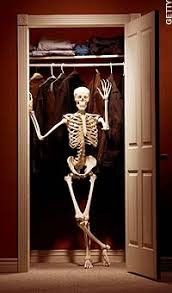 Ethos defines reliability on the part of the writer. This one is the easiest to fake. Several politicians appear reputable, but possess skeletons in the closet that they cannot afford to reveal. Yet, they still succeed at their goal: to sway voters to their side. Clearly, their reputations--whether valid or not--play a big part whenever people decide to trust them. In addition, people want to feel authority from an expert when they read or hear arguments. Nevertheless, anyone can pretend he knows what he is talking about in a written piece. In these days, Internet connections facilitate arguments by offering quick information with almost no work required.
Therefore, persuasive appeals are little more than tricks debaters use to pull proponents to their sides. They can be genuine, but it makes no difference in their overall effect on the public's views.
Therefore, persuasive appeals are little more than tricks debaters use to pull proponents to their sides. They can be genuine, but it makes no difference in their overall effect on the public's views.

Subscribe to:
Post Comments (Atom)
wow, I never thought about how even logos can be manipulative and not entirely true! It seems wrong that appeals that arent's genuine can still work to persuade.
ReplyDeleteI like how you made a whole blog post on ethos, pathos, and logos ;) haha. I like your creative point of view on how it often times isn't true and is subject to manipulation for the author's purpose. Many writers do that, however. I'm sure everyone alters the facts, even if it's just a little bit, to support his/her argument better. Also, love your pictures!
ReplyDelete